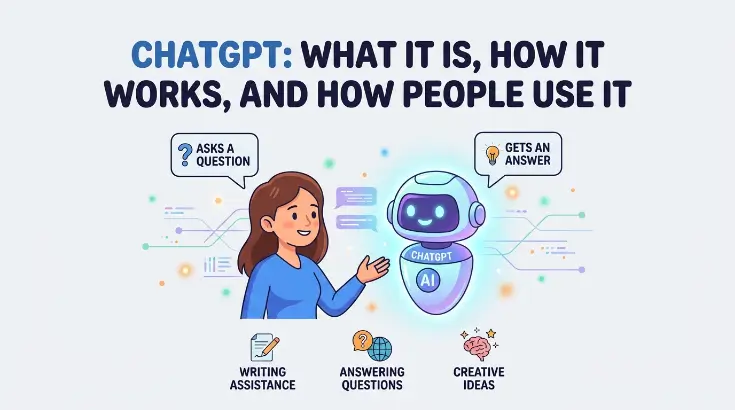
The internet has changed the way people search for information, learn new skills, write content, and solve everyday problems. One of the tools that has become part of this change is ChatGPT. However, many people search for it using different spellings, including chattpt.
If you have searched for chattpt and wondered what it means, you are not alone. In most cases, people using this term are looking for information about ChatGPT, the conversational artificial intelligence tool developed by OpenAI. It can answer questions, explain complicated subjects, help with writing, assist with coding, summarize information, and support many other everyday tasks.
This guide explains what chattpt refers to, how ChatGPT works at a simple level, what people can use it for, and how to get better results when interacting with an AI assistant.
What Is Chattpt?
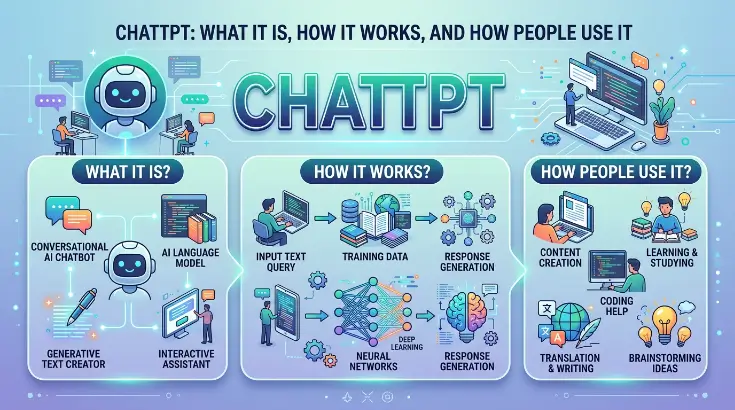
Chattpt is commonly used as a misspelled or shortened search term for ChatGPT. ChatGPT is an AI-powered conversational assistant that can understand written prompts and produce responses in natural language.
Instead of searching through dozens of web pages for an answer, a person can describe what they need in a conversation. The assistant can then respond based on the information and instructions available to it.
For example, someone might ask for an explanation of a difficult science topic. Another person might ask for help writing an email, while a student could request an easier explanation of a mathematical concept.
The usefulness of the technology comes from its ability to handle many different types of requests in one place.
How Does ChatGPT Work?
At a basic level, ChatGPT uses artificial intelligence models trained to understand and generate language. These models process the words in a user’s prompt and predict an appropriate response based on patterns learned during training and other information available to the system.
You do not need to understand the technical details to use it effectively.
Think of it as a conversation. You explain what you want, the system interprets your request, and it generates a response.
The quality of the answer often depends on how clearly the request is written. A vague prompt can produce a general response, while a detailed prompt can give the assistant much more useful direction.
For instance, asking “write about fitness” is very broad. Asking “write a beginner-friendly 800-word guide explaining how to start walking for exercise” gives much clearer instructions.
Why Are People Searching for Chattpt?
Search behavior is not always consistent. People make typing mistakes, use shortened words, or remember a brand name incorrectly. The term chattpt is one example.
Someone may type chattpt into a search engine because they have seen the name online but are unsure of the exact spelling. Others may simply type quickly on a phone and accidentally leave out letters.
Regardless of the spelling, the goal is usually the same: finding information about ChatGPT and learning how to use it.
As conversational AI becomes more common, people are also becoming curious about what these tools can actually do.
What Can ChatGPT Be Used For?
One of the biggest advantages of ChatGPT is its wide range of uses. It is not limited to one particular industry or type of task.
Writing and Editing
ChatGPT can help people draft emails, articles, social media posts, descriptions, outlines, and other types of written material.
It can also improve an existing piece of writing by making it clearer, shorter, more professional, or easier to understand.
For example, a person who has written a rough business email can provide the text and ask for a more polished version.
The result can then be reviewed and edited by the user before it is sent.
Learning
Students and independent learners can use conversational AI as an additional learning tool.
Instead of simply asking for an answer, a learner can ask the assistant to explain the subject step by step.
A useful prompt might be:
“Explain photosynthesis like I’m a beginner, then give me three simple examples.”
This encourages the system to focus on explanation rather than simply producing a definition.
Coding
ChatGPT can also assist programmers with software development.
It can explain programming concepts, review code, identify possible errors, create examples, and help users understand unfamiliar syntax.
A beginner might ask why a particular Python function is producing an error. An experienced developer might use the assistant to brainstorm different approaches to a programming problem.
However, generated code should always be tested. An AI assistant can make mistakes, misunderstand requirements, or suggest outdated approaches.
Brainstorming
Sometimes the hardest part of a project is coming up with ideas.
ChatGPT can be useful for brainstorming blog topics, business names, marketing ideas, video concepts, questions for an interview, or ways to organize a project.
The user can then choose the ideas that actually make sense for their situation.
Summarizing Information
AI assistants can also turn long material into shorter explanations.
A user can provide text and ask for a summary, key points, a simpler explanation, or a list of important ideas.
This can save time when working with lengthy documents or complicated material.
How to Write a Better Prompt
A prompt is simply the instruction or question you give to ChatGPT.
The better the instruction, the easier it is for the assistant to understand what you expect.
A useful prompt usually includes several important details.
First, explain the task. Then provide relevant context. Finally, describe the format or style you want.
For example, instead of saying:
“Write an article about travel.”
you could say:
“Write a beginner-friendly article about planning a five-day family trip. Use simple English, short paragraphs, clear headings, and practical examples.”
The second request gives much more direction.
Give the AI Context
Context can make a major difference.
If you ask the assistant to write something without explaining who the audience is, the response may be too technical or too basic.
Tell it whether you’re writing for beginners, professionals, students, customers, or general readers.
You can also explain the purpose of the content.
For example, a business owner might say:
“I run a small online clothing store. Write a friendly product description for customers who prefer simple and comfortable clothing.”
That information helps create a response that fits the situation better.
Ask for Changes Instead of Starting Over
One useful feature of conversational AI is that you can continue the discussion.
If the first answer is too long, ask for a shorter version. If it is too formal, request a more conversational tone. If an explanation is difficult, ask for simpler language.
You can say:
“Explain that again using an everyday example.”
or:
“Make this shorter and easier for a beginner to understand.”
This makes the interaction feel more like a conversation than a traditional search.
Can ChatGPT Make Mistakes?
Yes. This is one of the most important things users should understand.
AI-generated responses can sometimes contain incorrect information. A response may sound confident while still being inaccurate.
This is especially important when dealing with subjects such as medicine, law, finance, current events, technical specifications, or other areas where information can change or where mistakes can have serious consequences.
For important decisions, users should verify information with trustworthy sources.
AI should be treated as a useful assistant rather than an unquestionable authority.
Using ChatGPT for Research
ChatGPT can help organize research, generate questions, explain concepts, and summarize information. However, research quality depends on checking the underlying facts.
Suppose you’re researching a historical event. You can ask the assistant to explain the major events and then use reliable books, academic sources, museums, government resources, or established publications to confirm important details.
This approach combines the speed of AI with human judgment.
Privacy and Personal Information
Users should also think carefully about the information they provide to any online service.
Avoid sharing highly sensitive information unless you understand how that information is handled and why it is necessary.
Personal passwords, financial credentials, private identification numbers, and other sensitive details should not be casually entered into an AI conversation.
A good general rule is to provide only the information necessary to complete the task.
Chattpt for Everyday Work
For many people, the value of ChatGPT is not one impressive feature but dozens of small tasks.
Someone might use it in the morning to organize a list of priorities, later ask for help understanding a spreadsheet formula, and then use it to improve a customer email.
The technology can become a general-purpose assistant for repetitive knowledge work.
For example, a small business owner could use it to brainstorm product descriptions, prepare customer-service responses, organize meeting notes, and generate ideas for future content.
The person still makes the final decisions, but the assistant can reduce the amount of time spent on routine work.
Using AI Without Losing Your Own Voice
One concern with AI writing is that everything can start to sound the same.
The best approach is to treat AI as a starting point rather than a replacement for your own thinking.
Add your personal experience, examples, opinions, and knowledge. Check facts and remove anything that does not sound natural.
If you’re writing for a website, readers usually respond better to useful information and genuine experience than to generic text.
Your own perspective is what makes content different.
Common Mistakes New Users Make
People who are new to ChatGPT sometimes expect it to understand an extremely short instruction perfectly.For example, a prompt such as “make this better” does not explain what “better” means.
Better could mean shorter, more professional, friendlier, clearer, more persuasive, or something completely different.Another common mistake is accepting the first response without reviewing it.A better workflow is to read the answer, identify what needs improvement, and then provide another instruction.The conversation can gradually move toward the result you actually need.
Is ChatGPT Useful for Businesses?
Businesses can use AI tools in many different ways.
Customer service teams can prepare response templates. Marketing teams can brainstorm campaign ideas. Writers can develop outlines. Developers can investigate coding problems. Managers can organize notes and create drafts of internal documents.
The technology can be particularly useful for repetitive tasks that require language processing.
However, businesses should establish clear rules about privacy, accuracy, human review, and the types of information employees are allowed to enter into AI systems.
The Future of Conversational AI
Conversational AI is developing quickly.
Future systems are likely to become more capable of working across different types of information and assisting with increasingly complex tasks.
Instead of simply answering a question, an AI assistant may help users organize a project, analyze information, create content, write software, or complete a sequence of related tasks.
At the same time, users will need stronger digital judgment. Knowing when to trust an AI response, when to verify it, and when human expertise is necessary will become increasingly important.
Final Thoughts
If you searched for chattpt, you were most likely looking for information about ChatGPT and how this popular conversational AI technology works.
ChatGPT can help with writing, learning, brainstorming, coding, summaries, research preparation, and many everyday tasks. Its biggest strength is flexibility. Instead of requiring a separate tool for every small question, users can explain what they need in ordinary language and continue the conversation until they get a useful result.
At the same time, AI is not perfect. It can produce incorrect information, misunderstand a request, or provide an answer that requires additional checking. The smartest way to use it is as an assistant that supports your work rather than something that replaces your own judgment.
Whether you’re a student, writer, developer, business owner, or simply someone curious about new technology, learning how to communicate clearly with AI can make the experience much more useful.
The key is simple: explain what you need, provide enough context, review the response, and don’t be afraid to ask for improvements. With that approach, ChatGPT can become a practical tool for everyday tasks rather than just another technology people hear about online.