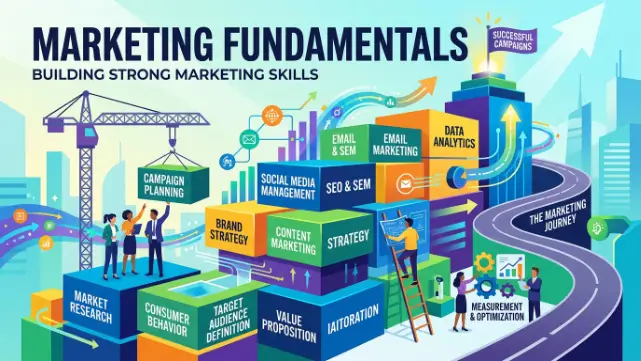
Every successful business starts with one important goal—reaching the right customers. Whether you own a small local shop, run an online business, or work for a large company, understanding marketing fundamentals is essential for long-term success. Marketing is much more than selling a product or running advertisements. It is the process of understanding customer needs, creating value, building trust, and encouraging people to choose your product or service over others.
In today’s competitive world, businesses cannot rely on luck alone. They need a clear marketing strategy that helps them attract customers, increase sales, and build lasting relationships. This is why learning marketing fundamentals is one of the most valuable skills for entrepreneurs, students, business owners, and marketing professionals.
This guide explains the core principles of marketing in simple language. Whether you are completely new to marketing or looking to strengthen your knowledge, these fundamentals will help you understand how successful businesses grow and connect with their audience.
What Are Marketing Fundamentals?
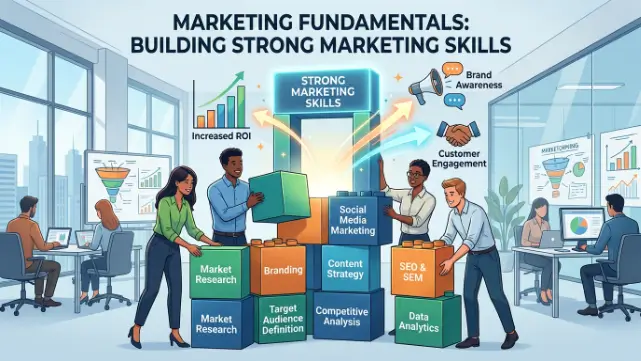
Marketing fundamentals are the basic principles that guide how businesses promote their products or services to customers. These principles help companies understand their audience, identify customer needs, create valuable products, and communicate their message effectively.
Marketing is not only about selling. It begins long before a product reaches the customer. Businesses first study the market, understand consumer behavior, develop products that solve problems, set competitive prices, choose where to sell them, and decide how to promote them.
Strong marketing fundamentals allow businesses to make informed decisions instead of relying on guesswork. When companies understand these basics, they are more likely to attract loyal customers and achieve sustainable growth.
Why Marketing Fundamentals Are Important
Every business depends on customers. Without customers, even the best products cannot succeed. Marketing helps businesses connect with the people who need their products and services.
Understanding marketing fundamentals offers several important benefits. Businesses can better understand customer preferences, improve their products, build stronger brands, and increase customer satisfaction. Effective marketing also helps companies stand out in competitive industries by highlighting what makes them unique.
For startups and small businesses, strong marketing fundamentals can make the difference between success and failure. Even companies with limited budgets can achieve impressive results when they understand their target audience and communicate effectively.
Understanding Your Target Audience
One of the most important marketing fundamentals is identifying the right audience. Every product is designed for a specific group of people. Trying to sell to everyone often leads to poor results.
Businesses should ask questions such as:
- Who is most likely to buy this product?
- What problems are customers trying to solve?
- What are their interests and preferences?
- How old are they?
- Where do they live?
- What motivates them to make a purchase?
The better a business understands its audience, the easier it becomes to create marketing campaigns that attract attention and build trust.
Market Research
Successful marketing always begins with research. Before launching a new product or service, businesses need to understand the market.
Market research involves collecting information about customers, competitors, and industry trends. Companies use surveys, interviews, customer feedback, online analytics, and competitor analysis to gather valuable insights.
Good research helps businesses identify opportunities, avoid costly mistakes, and make smarter decisions. It also allows companies to discover changing customer needs before their competitors do.
The Four Ps of Marketing
One of the best-known concepts in marketing fundamentals is the Four Ps. These elements work together to create a successful marketing strategy.
Product
The product is what the business offers to customers. It should solve a problem or meet a specific need. Successful products provide value, quality, and reliability.
Price
Pricing affects both customer perception and business profitability. A product priced too high may discourage buyers, while a price that is too low may reduce profits or make customers question its quality.
Businesses should consider production costs, competitor pricing, and customer expectations when setting prices.
Place
Place refers to where customers can purchase the product. Today, businesses often sell through physical stores, online shops, marketplaces, or mobile apps.
Choosing the right sales channels makes it easier for customers to find and purchase products.
Promotion
Promotion includes all the methods businesses use to inform customers about their products. This may include advertising, email marketing, social media, content marketing, public relations, and promotional campaigns.
The goal is to communicate value and encourage potential customers to take action.
Building a Strong Brand
A brand is much more than a company logo. It represents the overall image, personality, and reputation of a business.
Strong brands create emotional connections with customers. People often choose familiar brands because they trust them and have positive experiences.
Building a successful brand requires consistency in messaging, customer service, product quality, and visual identity. Businesses that maintain a strong brand image are more likely to attract loyal customers.
The Role of Digital Marketing
Technology has transformed how businesses communicate with customers. Digital marketing allows companies to reach people through websites, search engines, email, social media, and online advertising.
Unlike traditional marketing, digital marketing provides detailed performance data. Businesses can measure website traffic, customer engagement, conversion rates, and advertising results in real time.
This information helps companies improve future marketing campaigns and make better business decisions.
Content Marketing
Content marketing focuses on providing useful information instead of directly promoting products.
Businesses create articles, videos, guides, podcasts, and infographics that educate or entertain their audience. High-quality content builds trust and encourages customers to return for more information.
Over time, helpful content strengthens brand authority and increases customer loyalty.
Social Media Marketing
Social media platforms have become essential marketing tools for businesses of all sizes.
Companies use platforms such as Facebook, Instagram, LinkedIn, TikTok, and X to connect with customers, answer questions, share updates, and promote products.
Successful social media marketing focuses on engagement rather than constant selling. Businesses that interact with their audience often build stronger relationships and increase customer trust.
Customer Relationships Matter
One of the most valuable marketing fundamentals is maintaining strong relationships with customers after the sale.
Happy customers are more likely to return, recommend the business to others, and leave positive reviews.
Excellent customer service, quick responses, personalized communication, and reliable support all contribute to long-term customer satisfaction.
Retaining existing customers is often more cost-effective than constantly finding new ones.
Measuring Marketing Success
Marketing should always be evaluated to determine what works and what needs improvement.
Businesses often measure performance using metrics such as website visitors, sales growth, customer retention, conversion rates, email open rates, and social media engagement.
Analyzing these results helps companies improve future campaigns and allocate their marketing budget more effectively.
Common Marketing Mistakes
Many businesses struggle because they ignore basic marketing principles.
Some common mistakes include failing to understand the target audience, copying competitors without a strategy, ignoring customer feedback, using inconsistent branding, and focusing only on short-term sales instead of long-term relationships.
Avoiding these mistakes allows businesses to build stronger marketing strategies and achieve more consistent growth.
Future Trends in Marketing
Marketing continues to evolve as technology changes. Artificial intelligence, automation, voice search, video content, and personalized customer experiences are becoming increasingly important.
Consumers now expect businesses to provide relevant content, quick responses, and seamless online experiences.
Companies that continue learning and adapting will remain competitive in the years ahead.
Frequently Asked Questions
What are marketing fundamentals?
Marketing fundamentals are the basic principles that help businesses understand customers, promote products, build brands, and increase sales.
Why are marketing fundamentals important?
They help businesses attract the right customers, improve decision-making, increase customer satisfaction, and support long-term growth.
Can beginners learn marketing fundamentals?
Yes. Anyone can learn marketing fundamentals by studying customer behavior, market research, branding, pricing, promotion, and digital marketing techniques.
What is the most important marketing principle?
Understanding customer needs is often considered the foundation of successful marketing because every strategy should focus on providing value to the target audience.
Final Thoughts
Learning marketing fundamentals is one of the best investments anyone can make in today’s business world. Whether you are launching a startup, managing a growing company, or developing your professional skills, understanding these core principles provides a strong foundation for success.
Marketing is not simply about promoting products—it is about building relationships, solving problems, and creating value for customers. Businesses that understand their audience, deliver quality products, communicate effectively, and adapt to changing market trends are more likely to achieve long-term success.
As technology and consumer behavior continue to evolve, the fundamentals of marketing remain just as important as ever. Mastering these principles will help businesses build stronger brands, reach more customers, and grow with confidence in an increasingly competitive marketplace.